Are You Prepared for Dental Emergencies?
Is Stress Causing Damage to Your Teeth?
December 5, 2018Freshen Your Breath for Those Moments Under the Mistletoe
December 18, 2018
Are you prepared for dental emergencies before leaving town? The holidays are almost here, the kids will be out of school and chances are you’ll be traveling during the winter break. Dental emergencies can happen to anyone; unexpected toothaches, broken teeth, lost fillings or crowns. According to WebMD, you’re the first line of defense in a dental emergency. A dental emergency kit will help you respond if, and when, an emergency arises.
To help you prepare a dental emergency kit, Dr. Shane S. Porter of Premier Dentistry of Eagle created a list of common dental issues and what to do if these dental emergencies arise when you hit the road!
Have an Existing Dental Issue?
If you have any existing dental issues, be sure to have a check-up with Dr. Porter before you leave town. You decrease the odds of having a dental emergency while away from home if you are treated before. If Dr. Porter recommends any treatment, do it before your trip. Taking the time to take care of any pre-existing dental conditions can help save you anxiety and distress during your time away from home!
Research Dentists in the Area Where You Will Travel
Take the time before you leave to research dental offices in or near your vacation area that provide emergency care. It’s much easier to respond to a dental emergency if you already know where you can get help. Dr. Porter describes what qualifies as an emergency on his website and when to make an emergency appointment with him (or with another dentist when you’re out of town).
Items for Your Dental Emergency Kit
Take the time before you head out of town to assemble a dental emergency kit to help you be prepared on the road for whatever may come your way.
- Examination Gloves: Since you will likely be putting your hands in someone’s mouth during an emergency, it will be much more sanitary to use gloves.
- Dental Floss: Dental floss comes in handy when your 8-year-old bites into an apple and his loose tooth becomes a dangling tooth. You may have to finish the job by wrapping dental floss around the dangler to pull it out. (Be sure to put some money from the tooth fairy in your dental emergency kit.)
- Gauze Pads: You will need gauze pads of various sizes to control bleeding if you have to pull a tooth, or treat a broken tooth. Gauze will absorb the blood, but if bleeding is excessive, you can control it by biting down on the gauze for 30 minutes to keep pressure on the area. Make sure to store the gauze in a Ziploc bag to keep it dry and sanitary. (The end of the article will discuss how you can employ gauze for tooth-loss treatment).
- Cotton Swabs: That toothache you have might be coming from the nerve inside the tooth, which causes extreme pain. Use the cotton swabs to apply topical medication directly on the area of the tooth that is hurting.
- Topical Pain Medication: Topical medications, such as Orajel and DenTek, contain benzocaine, which is what dentists use to numb your mouth before they give you a shot. It is effective, and can be used up to four times a day to provide pain relief to an affected tooth.
- Oral Pain Medications: General pain medication such as acetaminophen, is an overall pain medication that should help the tooth to settle down. Be sure to follow the recommended dosage and age appropriate medications.
- Dental Filling and/or Dental Crown Repair Kit: There is nothing worse than having a crown or filling fall out while you’re away from home. Dental glue can be purchased over the counter at most pharmacies. If you’ve lost a crown, try to slip the crown back over the tooth, but don’t force it. Call Dr. Porter immediately at (208) 546-0655, so he can advise you what to do.
- Iodized Salt: An abscess is an infection at the root of the tooth or in between the teeth and gums. Until you return home, rinse your mouth with a solution of half a teaspoon of salt in eight ounces of warm water several times a day. Swish it back and forth in your mouth to bathe your teeth and gums with the solution. Don’t swallow the salt water, just spit it out and continue this routine until all of the salt water is gone.
- Baggies: The tooth fairy can’t come unless you save the tooth that was pulled, and if you have chipped or broken a tooth, you need a clean, dry place to store it until you return home.
Dental Emergencies: Treating a Dislodged Tooth
One of the most common oral injuries will involve an extruded tooth–a tooth that has not been completely knocked out but is dislodged. Gauze can also be used to hold a tooth in place if it has not been completely knocked out. Since an extruded tooth is partially dislodged from its socket, it requires immediate professional attention.
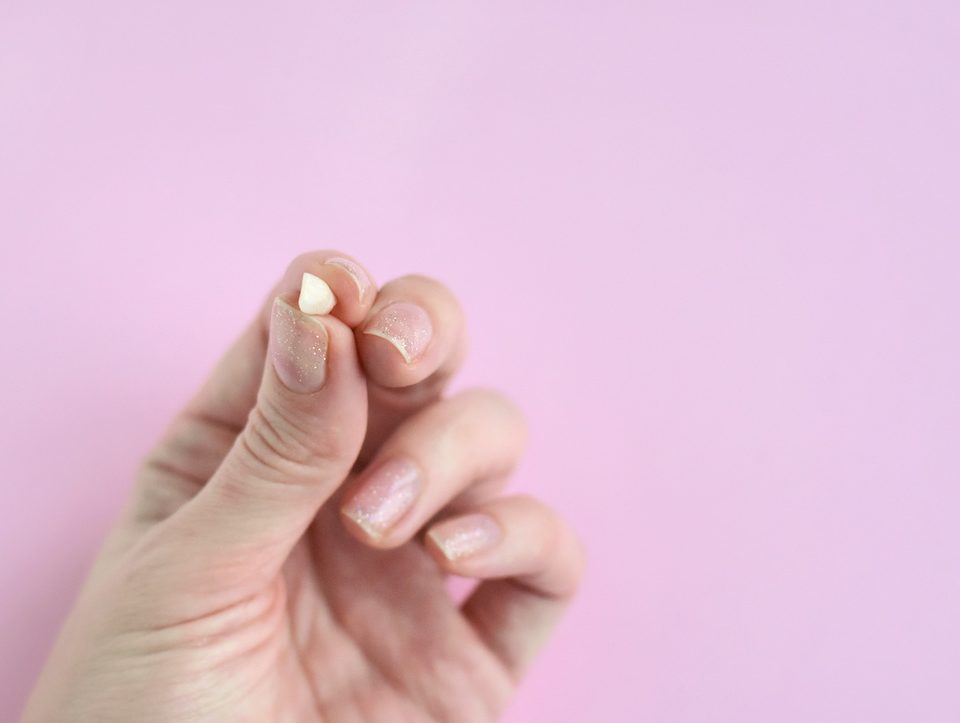
If you chip a tooth, the most important thing to do is to save the pieces that chipped, rinse them off and store them in a baggie, then rinse your mouth with warm water and stop any bleeding by applying gauze.
If a permanent tooth is completely knocked out, it’s important to keep the tooth unless you want a permanent hole in your smile. Hold the tooth by the top (the part that’s visible in the mouth). Don’t brush the tooth or remove any attached tissue portions, however make sure the tooth is clean by gently rinsing the root, then put it in a cup of milk. This will preserve the tooth and increase the odds that the dentist can re-implant it. Time is crucial, (30 minutes), so this is where your emergency dentist comes into play.
Response to Dental Emergencies
The appropriate response to dental emergencies varies, depending on the situation and severity. In the case of tooth loss, the immediate action taken may determine whether a dentist can replace the tooth or not. If in doubt, call us immediately for advice and then see an emergency dental service where you’re vacationing.
You won’t have to wait until you get home to schedule a follow-up appointment with Dr. Porter! Just fill out our convenient online form and you’ll be scheduled when you return home (based on availability.)
No matter what dental emergency you’re dealing with, whether on vacation or at home, call us immediately at (208) 546-0655, so we can advise you on the best course of action. While you’re at it, perhaps it’s time to schedule your regular check-up–the best way to avoid dental emergencies in the future.