How Did the Discovery of X-Rays Impact Dentistry?
Follow These Tips for a Beautiful Smile
January 24, 2019Is Your Smile Ready for Valentine’s Day?
February 9, 2019
One of the most important developments in dentistry are dental x-rays. Before the beginning of the 19th century, dentists could only diagnose dental problems by listening to a patient’s symptoms and looking inside the patient’s mouth. Since many of the problems, such as an aching tooth or problem with an abscessed root, is below the gum line the diagnosis was never very accurate. Dentists in the past had to make an incision in the gums to really see what was happening. Often the treatment was to pull the affected tooth, but the discovery of dental x-rays changed all that.
Although dental x-rays were used on a limited basis beginning in 1896, by the 1950’s x-rays became a routine part of the dental exam.
The Benefits of Dental X-rays and Imaging
One of the main reasons you go to the dentist is to detect dental problems before they turn into serious issues. Oral diseases are not usually visible to the naked eye, that is why dental x-rays are such an important part of dental care. Dental x-rays can detect even the slightest traces of oral health problems at their earliest stages, such as cavities, gum disease, and oral infections.. With early detection, you can get the treatment you need before problems have a chance to fully develop.
Dental x-rays produce a snapshot of your teeth and bones and help your dentist visualize the soft tissues that surround your teeth and jawbones.
Dental X-rays Can Detect Problems Early
When it comes to oral health, preventitive medicine is always best. X-rays help by detecting problems early like:
- Tooth decay. Decay can happen anywhere, even under your fillings, if they are cracked or chipped. Dental x-rays can detect decay before it becomes a bigger problem.
- Diseases in your jaw bones. Dental x-rays are highly effective in distinguishing people with osteoporosis from those with normal bone density. Dental problems that indicate low bone density include loose teeth, gums detaching from the teeth or receding gums, and ill-fitting or loose dentures.
- Gum disease, also known as periodontal disease. X-rays diagnose periodontal disease and help to determine the best treatment options. Dental x-rays also allow your dentist to detect problems in the earliest stages when treatment works best.
Digital X-rays Are Superior to Traditional X-Rays
One of the most important new advances in the modern world of dentistry is the use of digital x-rays. Introduced in the mid-1980’s, digital x-rays are safer and more convenient for the dentist and you! Unlike the former x-ray machines, digital x-rays are not developed in the darkroom and stored in your chart. Digital x-rays are stored on the computer and can be enlarged to zoom in on specific problems, versus the small pictures created from traditional x-ray equipment.
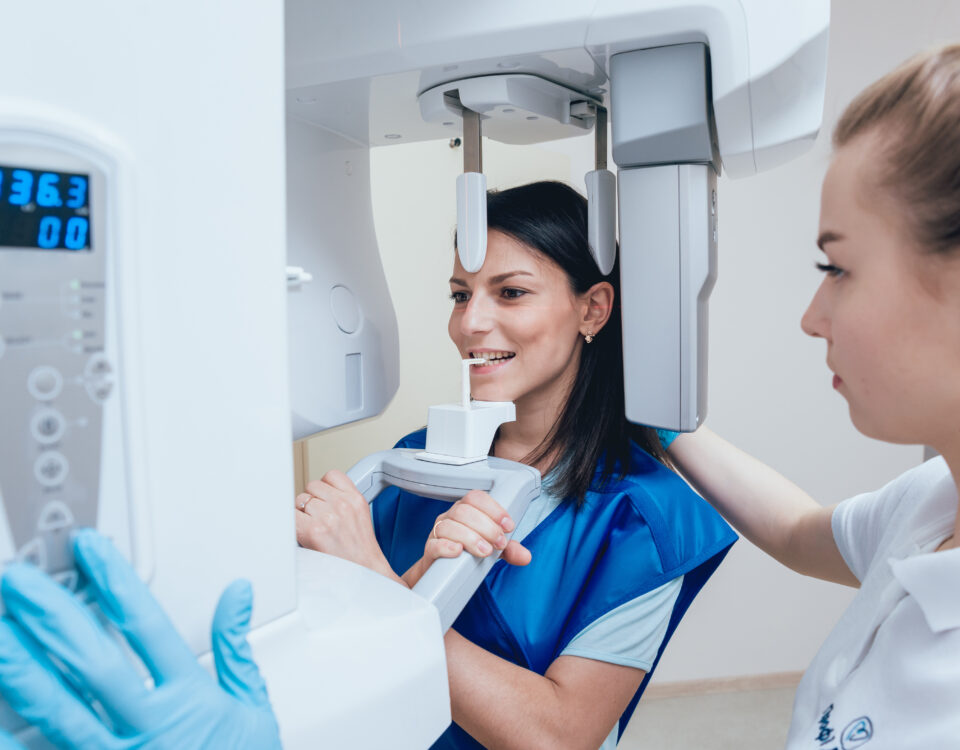
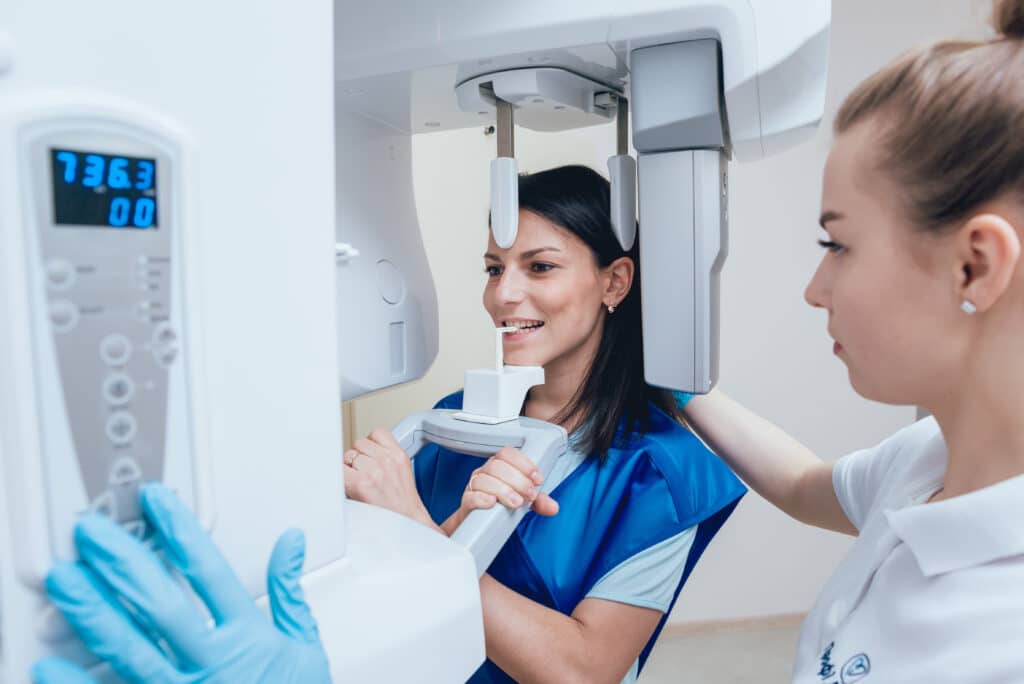
Dr. Shane S. Porter of Premier Dental of Eagle, uses this state-of the-art technology to help diagnose your dental health with accuracy, speed and comfort. Digital x-rays with our handheld x-ray device are faster and much more comfortable than conventional x-rays and digital x-rays provide a comprehensive visual knowledge of your teeth, the roots below the gum line and your jaw bones.
Our intraoral camera, which is about the size of a pen, lets you see what we see when we examine your mouth. Dr. Porter is then able to show you any problem spots and thoroughly discuss your oral health with the help of the live digital images. He is also better able to prescribe the oral care you need with the digital x-rays because the images are bigger and the quality of the image is superior.
X-rays are a routine part of the dental check-up with Dr. Porter. Some may ask why x-rays are necessary at each check-up. In short, x-rays can alert Dr. Porter to changes in the hard and soft tissues in your mouth from your last check-up.
Digital X-rays Offer Many Benefits
Consider the following benefits that digital x-rays offer our patients.
- Don’t require harmful chemicals for processing, making them more eco-friendly than traditional x-rays.
- Offer quicker results. Film x-rays required a minimum of 10 minutes to process. By contrast, images from digital x-rays allow Dr. Porter to see images immediately.
- Use up to 90 percent less radiation than conventional x-rays.
- Can readily be shared with insurance companies via email or to transfer records to another dentist if you are moving.
- Have superior image quality, which makes for a better diagnosis all the way around.
- Provide the ability to identify dental issues earlier and more accurately than traditional x-rays so that dental issues can be treated at their onset. When we treat problems early on, treatment is typically less invasive and less expensive.
To read about additional advantages of digital x-rays, follow this link.
At Premier Dentistry of Eagle, we have embraced the advances made in the dental industry which enables us to provide you with the very best care available. Find out more about our dental services and what makes us the preferred dentist in Eagle, Idaho!
Call for a Dental X-rays Consultation
Call our Premier Dental of Eagle office at (208) 546-0655. You will find that in addition to the cutting-edge dental technology, Dr. Porter also provides the skills, compassion and expertise to take care of all your dental needs and the dental needs of your whole family. Conveniently located at 467 South Rivershore Lane in Eagle, patients in the surrounding communities of Star, Middleton, Meridian, Garden City, and Boise, Idaho have easy access to our office.
You can be sure that this new technology will provide you with the best diagnostic treatment available.Take advantage of living in this modern age where dentistry has advanced to benefit you in so many ways, and give us a call today.