5 Simple Strategies to Stop Teeth Grinding

Is it Time to Schedule an Orthodontic Consultation for Your Child?
May 25, 2023
Prolong the Life of Your Dental Veneers With These Helpful Tips
June 8, 2023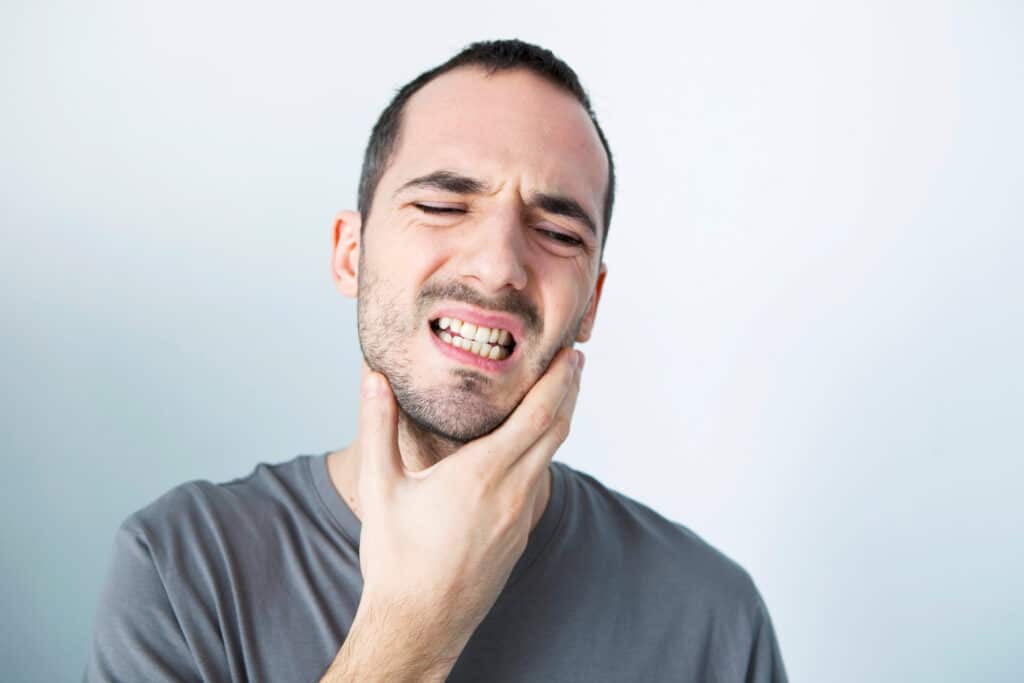
Do you wake up feeling like your jaw has been clenched all night? If so, you may be suffering from a condition known as teeth grinding. Also called bruxism, this practice commonly occurs during sleep and can lead to headaches, earaches, and other unpleasant symptoms. Fortunately, there are several effective strategies you can take to stop teeth grinding and get the restful sleep you need. In this article, we’ll explore five proven methods for preventing bruxism once and for all.
What is Teeth Grinding?
Teeth grinding, or bruxism, is a common sleep disorder that involves repeatedly clenching the teeth. It’s typically caused by stress, anxiety, or tension in the jaw and can lead to a range of problems such as headaches, earache, and even facial pain. If left untreated over time, it can cause damage to the teeth and jaw.
Symptoms
Signs and symptoms of bruxism may include:
- Teeth grinding or clenching, which may be loud enough to wake up your sleep partner
- Teeth that are flattened, fractured, chipped or loose
- Worn tooth enamel, exposing deeper layers of your tooth
- Increased tooth pain or sensitivity
- Tired or tight jaw muscles, or a locked jaw that won’t open or close completely
- Jaw, neck or face pain or soreness
- Pain that feels like an earache, though it’s actually not a problem with your ear
- Dull headache starting in the temples
- Damage from chewing on the inside of your cheek
- Sleep disruption
Causes of Bruxism
Oral health specialists often point to too much stress and certain personality types as causes of bruxism. Bruxism often affects people with nervous tension, such as anger, pain, or frustration. It also affects people with aggressive, hurried, or overly competitive tendencies. There is some proof that in some people, bruxism is caused by an imbalance in brain neurotransmitters. Also, some medicines, such as the antidepressants fluoxetine and paroxetine, can cause bruxism.
5 Simple Strategies to Stop Teeth Grinding
1. Practicing relaxation techniques before bed:
Relaxation activities like yoga, stretching, or even deep breathing can help you de-stress and relax tense muscles in your face, neck, and jaw. Try incorporating these activities into your pre-bedtime routine to reduce any built-up tension and reduce the risk of teeth grinding.
2. Avoid caffeine and other stimulants:
Caffeine is a stimulant that can increase stress levels, so it’s best to avoid coffee, tea, energy drinks, etc., in the evening or late afternoon. You should also try to limit your intake of alcohol, as it can cause dehydration and make teeth grinding worse.
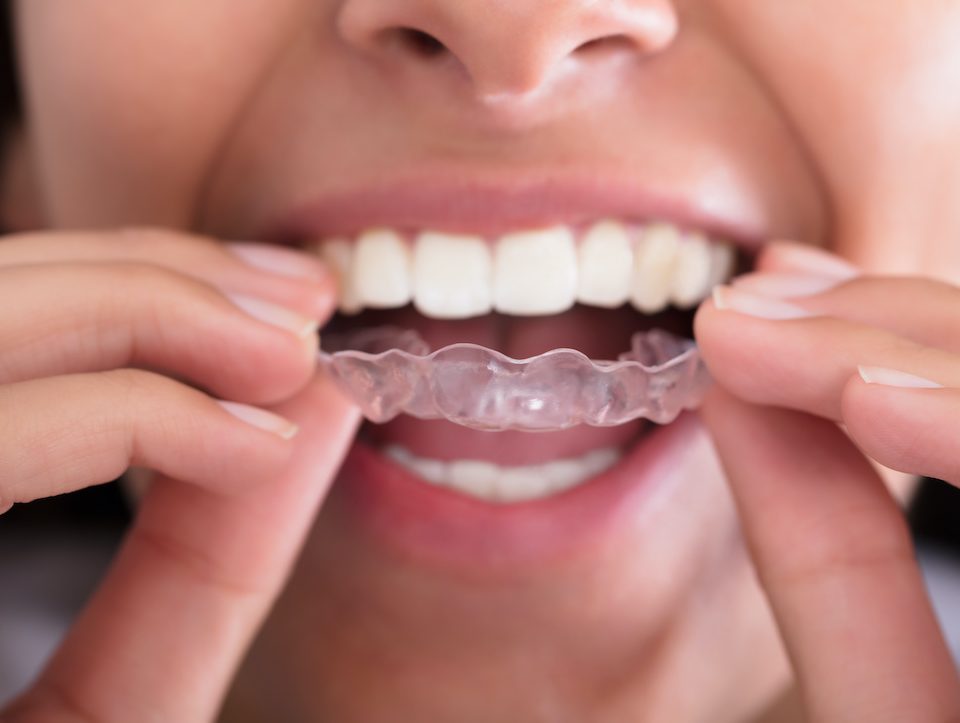
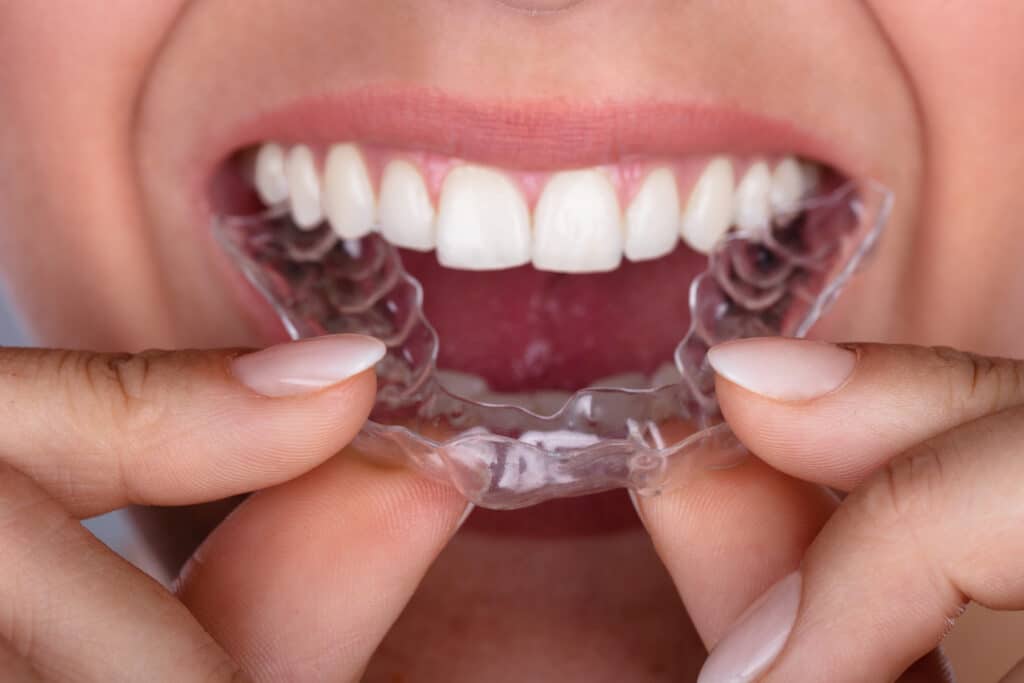
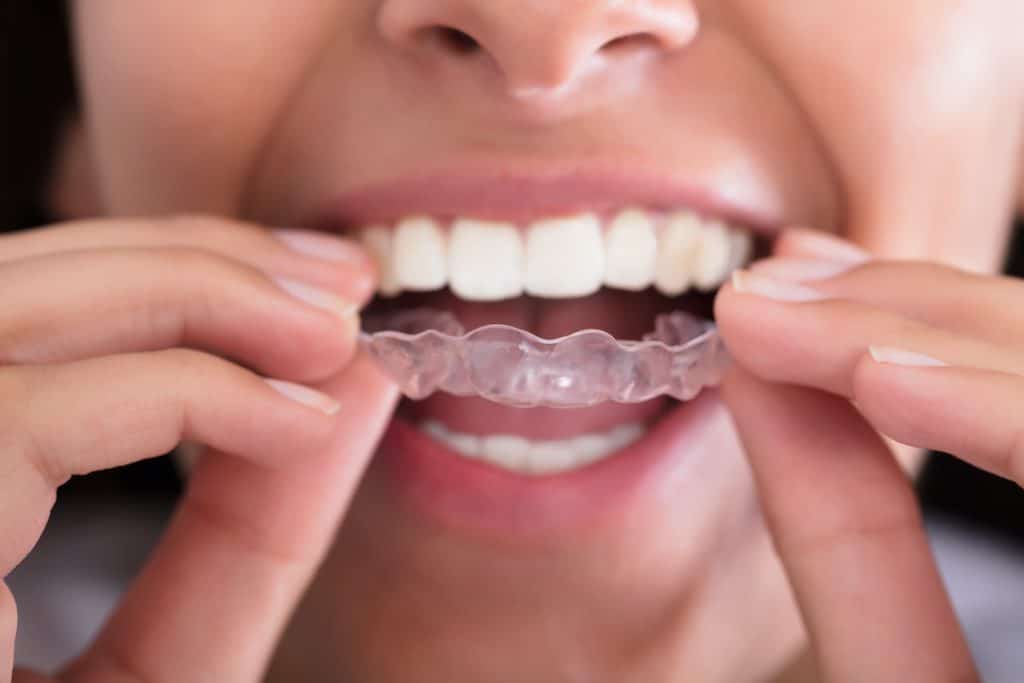
3. Use a mouth guard:
Mouth guards can be purchased over-the-counter or custom made by your dentist to help prevent teeth grinding during sleep. They act as a cushion between the upper and lower teeth, providing an extra layer of protection against further damage.
4. Address underlying issues:
If stress and anxiety are the root cause of your teeth grinding, it’s important to address those issues head-on. Consider talking to a mental health professional or other therapist who can help you work through any unresolved emotions or challenges that could be causing your bruxism.
5. Get sufficient sleep:
Lack of sleep can lead to tension and stress, so it’s important to get adequate rest. Aim for 7-8 hours of sleep each night and try to stick to a consistent bedtime routine. This will help ensure you wake up feeling well-rested and relaxed.
By following these five simple strategies, you can take control of teeth grinding and get the restful sleep you need. With a little perseverance, you can find relief from bruxism and start enjoying your nights again.
Get Dental Help with Bruxism
If you think you may be suffering from bruxism, it’s best to consult with your dentist. They can examine your mouth and teeth for signs of damage and recommend additional treatments or therapies that may help. The most popular treatment option for bruxism is a night-guard. A night-guard works by separating your upper and lower teeth, providing a protective barrier while you sleep.
Your dentist can also provide advice on lifestyle changes that may help reduce bruxism. These include reducing stress levels, avoiding stimulants before bedtime, and making sure you get sufficient rest each night.
By following these five simple strategies, you can take control of teeth grinding and get the restful sleep you need. With a little perseverance, you can find relief from bruxism and start enjoying your nights again.
Make an Appointment with Premier Dentistry of Eagle
With the right approach, bruxism does not have to be a chronic condition. By following these strategies, you can take back control of your life and enjoy healthy sleep once again. If you’d like to learn more about bruxism and how we can help, contact us at Premier Dentistry of Eagle today. We look forward to helping you on your journey to better oral health!